

ALIPANC was created and managed during the pandemic and has continued to grow over the past months, now bringing together 63 groups and 202 members from 30 hospitals and 33 research centers across Spain. Its community includes clinical researchers (oncologists, gastroenterologists, surgeons, immunologists, radiologists, pathologists), basic scientists, epidemiologists, statisticians, and bioinformaticians
Collaboration between the groups is a fact with studies already underway. Collaborations have also been established with external groups and entities, both nationally and internationally. Building common resources (databases, biobanks) in a federated way using the same protocols is among the challenges of ALIPANC.
Attracting and training young researchers is a major commitment for ALIPANC.

CANCER OF THE CANCER OF THE NARROW
Pancreatic cancer is one of the most aggressive tumors and, despite its relatively low incidence, it ranks very high in terms of mortality. In Spain, 8,211 pancreatic cancer patients were diagnosed in 2020 and 7,568 died that same year.
When a patient is diagnosed with pancreatic cancer, he loses 98% of his life expectancy, as the median survival is still about 7 months, and only 7% of patients survive 5 years after diagnosis.
Although increasingly effective treatments are available, very fewpatients are able to benefit from them, as the majority (80%) of patients are diagnosed when the tumor is already in advanced stages.
Moreover, the fact that its frequency is increasing significantly in our environment will turn this tumor into a relevant public health problem if measures are not taken quickly.
Science is the great hope against cancer
Thanks to research, 60% of cancers that were fatal 30 years ago are now cured (Ministry of Science and Innovation). Therefore, in order to control pancreatic cancer it is crucial to do research to understand its causes and pathophysiological and molecular mechanisms, how to diagnose it in early stages when it is still treatable, and how to improve its treatment and the management of patients in the different phases of the disease.
Pancreatic cancer out of control
The scant interest it has aroused until now in society due to its lack of knowledge, in medical and research circles due to the limited availability of options for the management of these patients and the difficulties in researching this cancer, and in funding agencies due to its low incidence and prevalence, has meant that there have been no significant advances in the control of this disease in comparison with other currently preventable and curable cancers, such as breast cancer. All this explains why pancreatic cancer is out of control.
Latest Alipanc news
Upcoming ALIPANC meetings
We share the schedule of upcoming sessions included in our monthly meetings, as well as the scientific activities...
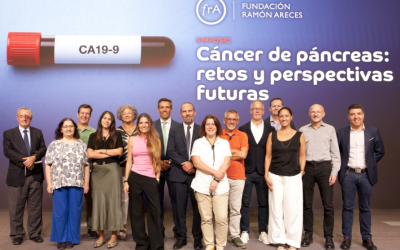
ALIPANC researchers organized the Symposium “Pancreatic Cancer: challenges and future perspectives”.
On September 17, at the Ramón Areces Foundation headquarters, Mariano Barbacid and Carmen Guerra, researchers at the...
Announcement: Botton-Champalimaud International Pancreatic Cancer Conference 2025
The second edition of the Botton-Champalimaud International Pancreatic Cancer Conference (BCIPCC) will take place from...