by Comite Web | Sep 11, 2025 | Sin categorizar
On September 17th, the conference “Pancreatic Cancer: challenges and future perspectives” will take place at the Ramón Areces Foundation. Leading international experts, including members of ALIPANC, will present advances in basic, translational and clinical research.
Four sessions will address the most recent advances on the origin and molecular evolution of the tumor, mechanisms of resistance and new therapeutic strategies and clinical research.
Attendance is free with prior online registration – Don’t miss it!
More information: Fundación Ramón Areces.
by Comite Web | Jul 29, 2025 | Sin categorizar
At the 2025 ASCO congress it was presented the positive results of the PANOVA-3 trial. This is the first and the only positive trial in locally advanced pancreatic cancer (LA-PDAC)
Tumor treating fields (TTFields) use alternating electric fields to disrupt cancer cell proliferation.
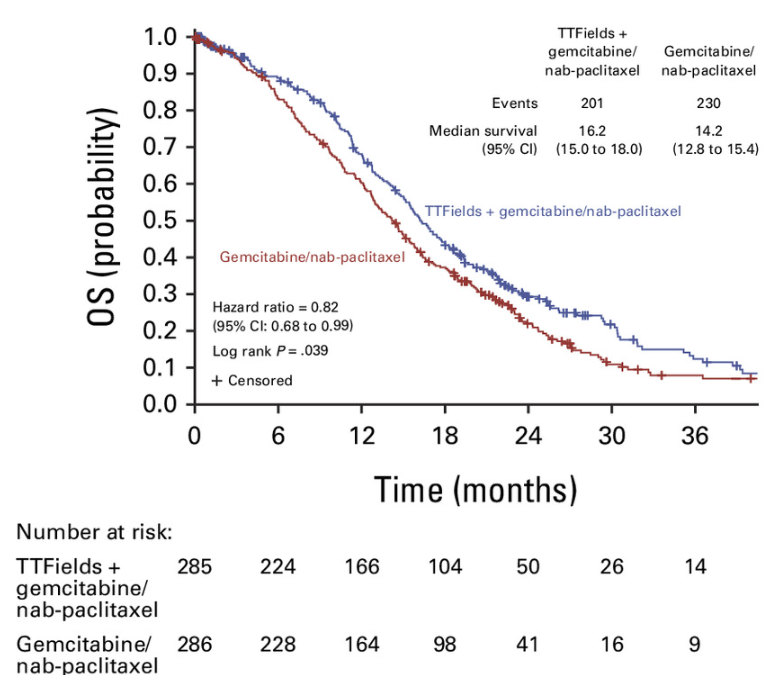
571 newly diagnosed LA-PDAC were randomly assigned to received gemcitabine and nab-paclitaxel with or without TTFields.
Overall survival was significantly prolonged using TTFields with chemotherapy versus chemotherapy alone (median 16.2months, vs 14.2 months, HR 0.82, p 0.039).
Progression free survival, local progression free survival, and overall response rate were not improved.
Importantly pain free survival was significantly prolonged with TTFields plus chemotherapy (median 15.2 months vs 9.1 months, HR0.74, p 0.027).
Distant progression free survival was longer in patients treated with TTFields plus chemotherapy (13.9 months vs 11.5 months, HR 0.74, p 0.022).
Device-related skin adverse events were experienced by 76.3% of patients, but only 7.7% of patients presented grade 3 adverse events.
This trial was published in J Clin Oncol on May 31, 2025, and the lead author of the study is Dr. Teresa Macarulla, a distinguished member of ALIPANC.
The full study can be accessed at the following link: https://pubmed.ncbi.nlm.nih.gov/40448572/
by Comite Web | Jul 28, 2025 | Sin categorizar
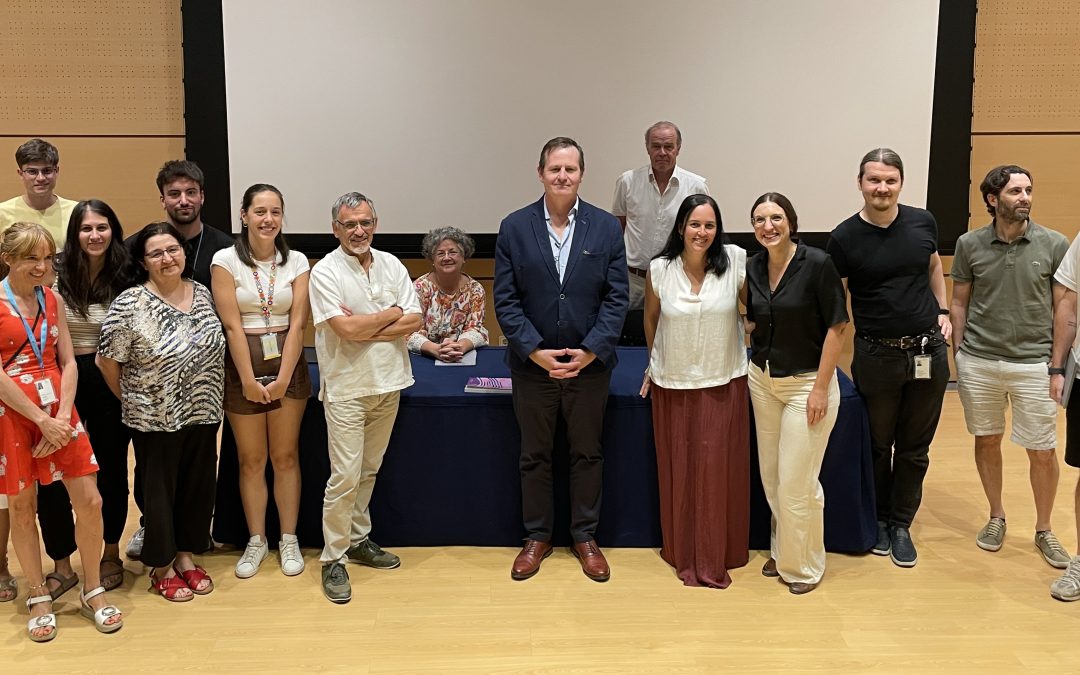
Last Thursday, Dr. Peter Bailey, Director of Translational Genomics at the Botton-Champalimaud Center in Lisbon and member of ALIPANC, visited the Spanish National Cancer Research Center (CNIO), where he gave a seminar focused on the role of extrachromosomal DNA (ecDNA) in pancreatic cancer.
His intervention aroused considerable interest among the research community of the center, especially among the researchers of the different groups that make up the alliance, who took advantage of the occasion to meet with Dr. Bailey. During the visit, they discussed scientific issues of common interest, exchanged perspectives on current lines of research and explored possible avenues for future collaboration.
Dr. Bailey’s visit strengthens the links between institutions committed to translational research in pancreatic cancer and highlights the importance of promoting scientific dialogue and international cooperation in this field.
by Comite Web | Jul 15, 2025 | Sin categorizar
This one-day symposium, divided into four sessions, will bring together experts in basic, translational and clinical research working on the study of pancreatic cancer, one of the most aggressive and best characterized tumors at the molecular level. Key aspects of tumor origin, experimental models of new therapies and clinical research with new generation drugs, such as KRAS oncogene inhibitors, will be addressed.
Date: September 17, 2025
Venue: Fundación Ramón Areces C/de Vitruvio, 5 28006 MADRID
Attendance is in person (until full capacity is reached) and requires prior registration.
https://www.fundacionareces.es/fundacionareces/es/actividades/cancer-de-pancreas-retos-y-perspectivas-futuras.html

by Comite Web | Jul 11, 2025 | Sin categorizar
A study led by scientists from two ALIPANC groups at the Spanish National Cancer Research Centre (CNIO) has uncovered the mechanism by which a genetic variant acts and possibly increases the risk of developing pancreatic cancer. The findings have been published in the prestigious journal GUT. This discovery opens the door to improving early identification of individuals more vulnerable to this type of tumor and to designing more effective strategies for its prevention and early detection.
The research, with Cristina Bodas and Irene Felipe as first authors from the group led by Francisco X. Real, has generated a new mouse model that replicates a genetic variant in the CTRB2 gene: specifically, the deletion of exon 6, which is present in approximately 17% of the population. Mice carrying a deletion of the same exon exhibit early signs of endoplasmic reticulum stress in acinar cells and increased inflammation, two processes closely linked to the development of pancreatic cancer. The findings observed in the mouse model were validated through transcriptomic analyses of pancreatic tissue from organ donors. This model thus emerges as a key tool to better understand the origins of the disease and explore new preventive strategies.
Link to article: https://pubmed.ncbi.nlm.nih.gov/40254337/
Link to the group: https://alipanc.org/grupo/carcinogenesis-epitelial/
Another link of interest: https://www.cnio.es/noticias/el-cnio-abre-una-via-hacia-la-prevencion-del-cancer-de-pancreas/
by Comite Web | Jun 2, 2025 | Sin categorizar
ALIPANC invites you to this course:
“From biological fundamentals to emerging therapies: a complete immersion in pancreatic cancer.”
- Date: from June 25th to 27th
- Venue: Faculty of Experimental Sciences (Facultad de Ciencias Experimentales) – Universidad Francisco de Vitoria (UFV), Madrid
- Espacio DOT | Pecera E
- Time: 9:00 am to 5:00 pm
- Registration period: from May 12 to June 18
At ALIPANC, we are pleased to share this interesting initiative organized by the Francisco de Vitoria University, which offers updated training on one of the biggest challenges of current oncology: pancreatic cancer.
The course will bring together leading specialists from the academic and clinical fields to address advances in diagnosis, treatment and prevention. Through lectures and specialized sessions, both the biological foundations of the disease and emerging therapies that are transforming its treatment will be explored.
An key event for health professionals and students interested in expanding their knowledge and contributing to the improvement of pancreatic cancer treatment.
More information and registration: https://www.ufv.es/curso-de-verano-cancer-de-pancreas/