by Comite Web | Nov 16, 2022
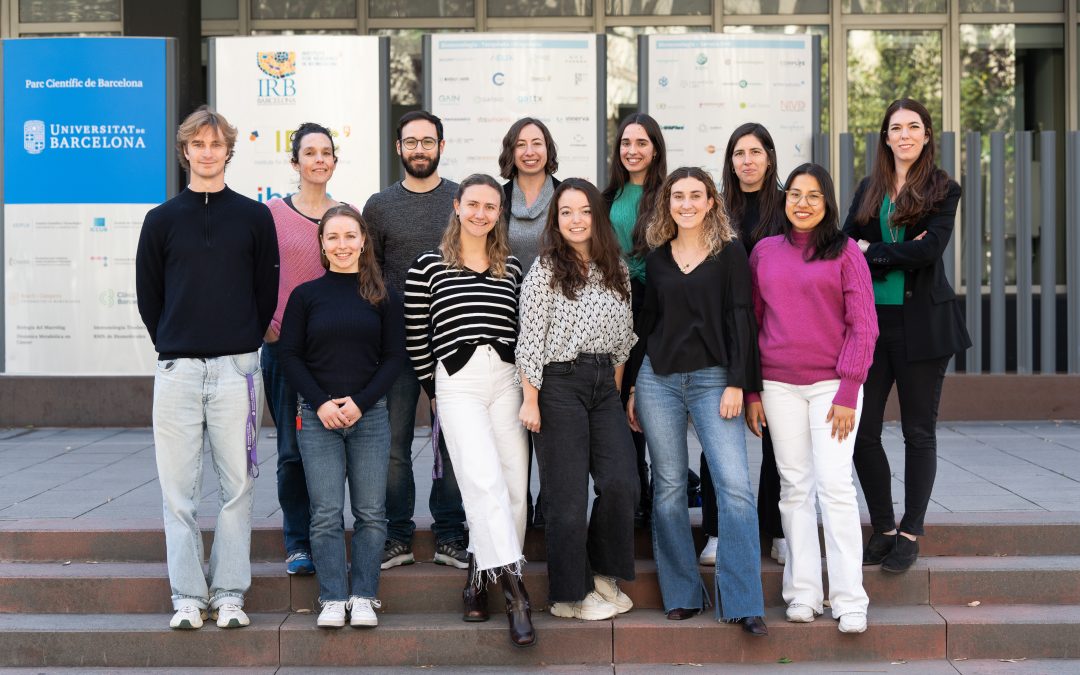
The ‘Inflammation, Tissue Plasticity and Cancer’ group belongs to the Institute for Research in Biomedicine of Barcelona (IRB Barcelona). Initiated this year 2022, the group led by Dr. Direna Alonso-Curbelo studies the interaction between the genetic mutations that appear in (pre)malignant lesions and inflammation, in order to (i) understand how they alter the normal identity of cells and their environment to promote cancer, and (ii) understand how they alter the normal identity of cells and their environment to promote cancer. (ii) to develop strategies for early detection and more specific treatment. The group focuses its research on pancreatic and liver cancers and other diseases associated with inflammation.
With respect to pancreatic cancer, the laboratory seeks to determine the molecular, cellular and tissue factors that promote the initiation of pancreatic cancer, in order to find new molecular and cellular targets to prevent or block the action of “driver” mutations and risk factors (pancreatitis) of the disease. The main objectives are:
- To identify mechanisms of neoplastic transformation, with special attention to epigenetic heterogeneity among pre-tumor pancreatic cells and their evolution during tumor progression.
- Define activated epigenetic programs that contribute to tumor initiation and metastasis.
- To identify the interactions between tumor cells and the immune system responsible for inducing pro-tumorigenic inflammation and immune evasion.
- Development of new flexible in vivo models and functional genomics tools (CIRSPR/Cas, shRNA, lineage-tracing) to validate new molecular and cellular targets.
To achieve its objectives, the laboratory combines omics techniques including single cell analysis (eg Alonso-Curbelo et al. Nature 2021; Burdziak*, Alonso-Curbelo* et al., BioRxiv 2022); CRISPR/RNAi technologies, organoids and cell cultures; and innovative animal models that allow more flexible study of the interactions between the tumor and the environment in which it originates and progresses. The long-term goal is to identify new approaches to detect and intercept pancreatic cancer at earlier stages.
by Comite Web | Nov 16, 2022
The pancreatic cancer research group of our institution is mainly composed of researchers from the areas of Oncology (clinical and basic-translational), General Surgery and Anatomic Pathology. The main objective of the group is to increase the knowledge of the disease in order to develop new diagnostic and therapeutic methods to improve the patient’s life.
The main areas of research focus on the development of precision medicine in pancreatic cancer.
At the translational level, the most important projects focus on the study of the usefulness of liquid biopsy as a method of molecular characterization and biomarker of response to treatment, as well as the generation of organoids as an in vitro model for personalized pharmacological assays. In addition, the group is very active in the field of clinical research.
At the institution we have several clinical trials (phase I, II and III) that offer pharmacological therapeutic alternatives to patients with advanced tumors. Similarly, we have ongoing multicenter randomized studies comparing different surgical techniques in patients with localized tumors. In addition, we collaborate in the development of impact studies on the dissemination of circulating tumor cells during surgery and 3D modeling for liver and pancreatic tumors from standard imaging tests.

by Comite Web | Nov 16, 2022
The Precision Nutrition and Cancer laboratory, headed by Dr. Ramirez de Molina focuses on improving the quality of life of cancer patients by designing precision nutrition products and strategies to improve tumor treatment and prognosis, as well as nutritional strategies to improve immune system impairment. The Precision Nutrition group is focused on studying the relationship between precision nutrition, metabolism and cancer. His group develops multidisciplinary research focused on: exploring metabolic reprogramming as a biomarker and therapeutic target in cancer; the study of the relationship between lifestyle factors (nutrition, physical activity), genetics (individual susceptibility), the consequent global metabolic state (healthy/unhealthy), its relationship with chronic inflammation and immune response, and the development, progression and response to treatment of cancer patients.
He is also involved in the development and application of digital systems and mhealth platforms to enable the exchange of key clinical prognostic data (patient symptoms, genetics, nutritional lifestyle factors…) between oncologists and patients, which are improving medical decision making by optimizing cancer treatment. In short, its main objective is to include precision nutrition in personalized medicine by analyzing personal characteristics, genetic susceptibility and physiological conditions, the microbiome, etc. to define biomarkers and personalized nutritional strategies that are effective in promoting health through molecular nutrition.

by Comite Web | Nov 16, 2022
We are a basic and translational research group mainly focused on pancreatic cancer. We used patient-derived models both in vivo (PDXs) and in vitro (PDOs, primary cultures of PDXs), as well as orthotopic models with cells derived from the KPC model, to study the impact of tumor metabolism and intratumoral heterogeneity on treatment resistance.
We focus on the search and validation of new drug targets, always favoring drug repositioning. We currently have several ongoing projects to evaluate the role of lipid metabolism in treatment resistance and tumor stem cell function.
by Comite Web | Nov 16, 2022
The pancreatic cancer group of the Centro Integral Oncológico Clara Campal is a clinical group formed by medical and radiation oncologists, general surgeons with expertise in pancreatic surgery as well as gastroenterologists, pathologists and geneticists with the support of psycho-oncologists, endocrinologists and pain unit to provide the patient with comprehensive assistance in this disease.
The objective of our unit is to provide personalized treatment with the best techniques and the latest units to each of our patients. To this end, we have extensive experience in the treatment of this disease and in the development of cutting-edge clinical trials from Phase I to Phase IV.