by Comite Web | Sep 17, 2026 | Sin categorizar
Cancer stem cells (CSCs) are a highly tumorigenic population of pancreatic ductal adenocarcinoma (PDAC) cells that contribute to tumor progression, metastasis, therapy resistance and disease relapse. In this study, Pérez-Ruiz and colleagues investigated apMNKQ2, a DNA aptamer targeting MNK1, a protein involved in PDAC progression and CSC maintenance. Using patient-derived models, the authors showed that apMNKQ2 impaired pancreatic cancer cell growth and several properties associated with tumor aggressiveness. Importantly, the aptamer strongly affected the CSC population, markedly reducing its ability to self-renew and initiate new tumors. The study also demonstrated that apMNKQ2 can reach tumors following systemic administration and showed a favorable safety profile in preclinical models. Together, these findings identify MNK1 as a promising therapeutic vulnerability in pancreatic CSCs and support the further development of apMNKQ2 as a potential new therapeutic strategy for PDAC.
The study was led by Bruno Sainz from the Instituto de Investigaciones Biomédicas, Madrid, and published in the Journal of Biomedical Sciences.
PMID 42410607
doi: 10.1186/s12929-026-01275-6
by Comite Web | Sep 17, 2026 | Sin categorizar
The ESPACE consortium presents a comprehensive multi-omic atlas of the human pancreas, profiling more than 4 million cells from 57 donors across fetal development, adult homeostasis, and type 2 diabetes.
With a particular focus on the exocrine compartment, the study resolves the heterogeneity of acinar and ductal cells and reveals a transcriptional continuum connecting these identities. At the root of this continuum, they identify and validate in situ a rare population of plastic centroacinar-like cells with acinar-to-ductal metaplasia and developmental progenitor-like features.
These findings provide a new framework for investigating cellular plasticity in the healthy human pancreas and how these states may relate to processes involved in pancreatic injury, regeneration, and disease, including pancreatic cancer.
The ESPACE atlas is openly available to the community through an interactive web portal, where researchers can explore and access the single-cell datasets and associated cell states. Elisabet Mereu, from the Institut Josep Carreras in Badalona, is the first author of the paper, published in Cell Metabolism.
PMID 42586061
https://doi.org/10.1016/j.cmet.2026.07.023
Explore the ESPACE Human Pancreas Atlas: singlecell.charite.de
by Comite Web | Jul 1, 2026 | Sin categorizar

Speaker: Dr. Prof. Dieter Saur
Institution: Technical University of Munich
Title:“Decoding the PDAC Ecosystem Through Integrated Computational and Experimental Approaches”
Description
On July 21 at 3:00 p.m. CET, ALIPANC will hold another session of the ALIPANC Seminar Series, an initiative designed to promote scientific exchange and highlight the most innovative advances in pancreatic cancer research.
Dieter Saur, MD, is a professor of Translational Cancer Research at the Technical University of Munich (TUM), director of the Institute for Experimental Cancer Therapy, and head of the Division of Translational Cancer Research at the German Cancer Research Center (DKFZ).
A physician and researcher specializing in gastroenterology and oncology, his work focuses on the biology of pancreatic cancer, including tumor progression, genetic heterogeneity, the tumor microenvironment, and mechanisms of resistance to therapies. His pioneering work has led to the development of innovative genetically modified mouse models and has significantly contributed to expanding our understanding of pancreatic cancer, with the goal of translating these findings into more effective treatments for patients.
Access
This seminar is open to the public; register via the following link:
https://us06web.zoom.us/meeting/register/O9yIJjonRO6A7fdAAxvG-w
For any additional information, please contact info@alipanc.org to request the meeting link.
by Comite Web | Jun 18, 2026 | Sin categorizar
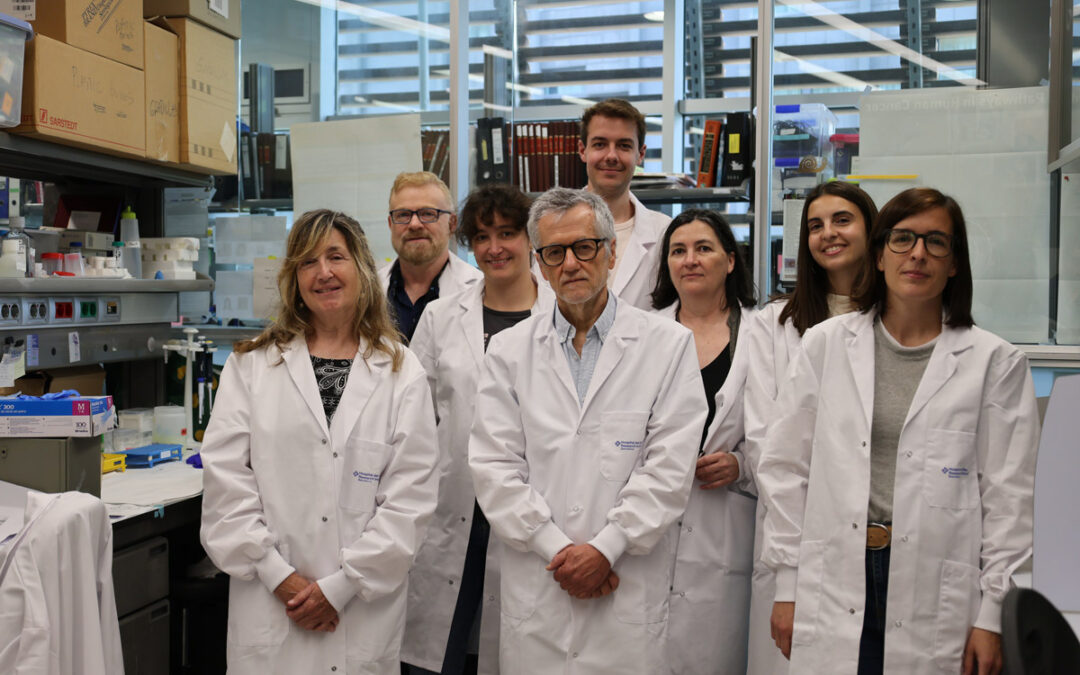
A study led by the Hospital del Mar Research Institute and the IIBB-CSIC has identified a new strategy for treating pancreatic cancer based on inhibiting the PARP2 protein. The results, published in Science Advances, show in animal models that blocking this protein allows for a two-pronged attack on the tumor: causing cancer cells to die and facilitating the immune system’s response.
The study shows that genetic inhibition of PARP2 prevents cells from managing replicative stress, triggering their death. At the same time, it helps immune cells access and eliminate the tumor, which is particularly important in this type of cancer, considered a “cold tumor” due to its low immune response.
Furthermore, the results have been validated using patient data, reinforcing the potential of PARP2 as a new therapeutic target. Unlike current treatments targeting the PARP protein family—which are limited to a small subgroup of patients with mutations in genes involved in DNA repair—this strategy could benefit a significantly larger number of patients with pancreatic cancer.
The study paves the way for the development of specific PARP2 inhibitors, with the potential to combine them with existing treatments such as immunotherapy, thereby improving their efficacy and reducing side effects. Furthermore, this approach could be applied to other tumors with similar characteristics.
Reference article:
Neus Martínez-Bosch, Noemí Manero-Rupérez, Núria Vázquez-Bellón, Bennett Nickell-Hernández, Cristina Ventura-Blanch, Nura Lutfi, Carmen G Lechuga, Carlos Martínez, Mireia Moreno, Coral Ampurdanés, Etna Abad, Mar Iglesias, María Muñoz-Escribano, Ana Janic, Meritxell Rovira, Carmen Guerra, Gabriel A Rabinovich, José Yélamos, Pilar Navarro. PARP2 deficiency impairs pancreatic cancer progression by promoting genomic instability and antitumor immunity . Science Advances 2026; 12(19): eadu8849
by Comite Web | Jun 16, 2026 | Sin categorizar
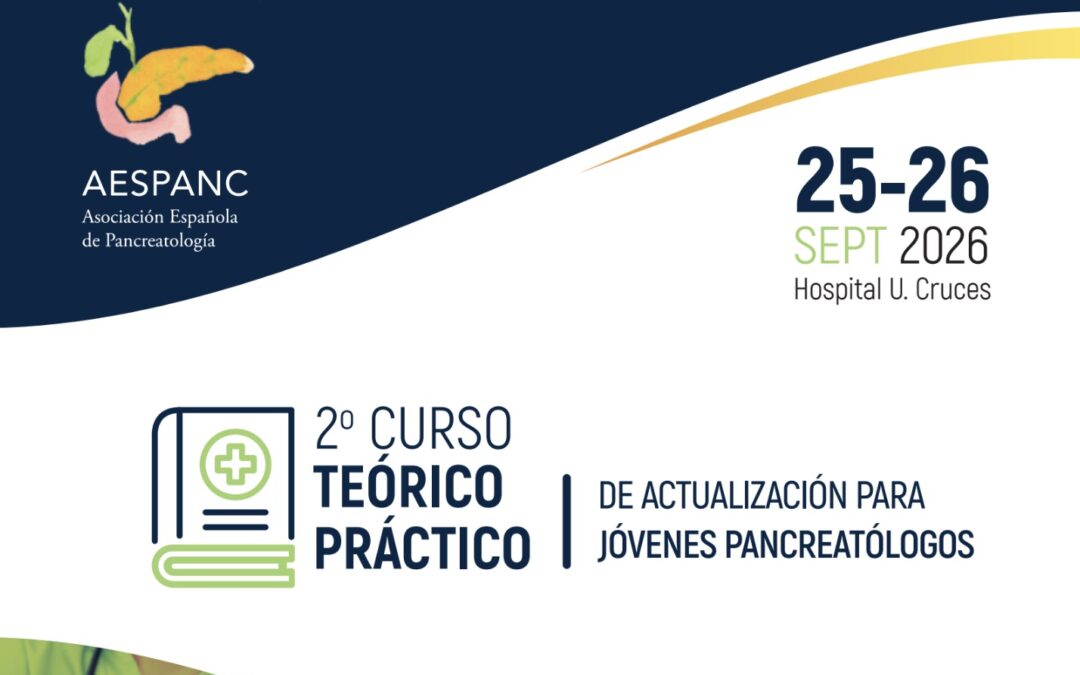
September 25–26, 2026
Cruces University Hospital (Barakaldo)
A course designed to provide an update on pancreatology, combining theoretical and practical training, and covering the diagnosis, characterization, and management of pancreatic lesions through sessions led by specialists and hands-on clinical activities.
For more information: https://drive.google.com/file/d/1O8ILQseU3MQ_weqNnKGtwWPrByftJKaJ/view
by Comite Web | Mar 26, 2026 | Sin categorizar

Prof. Andreas Trumpp – ALIPANC Online Seminar
Speaker: Prof. Andreas Trumpp
Affiliation: German Cancer Research Center (DKFZ) & HI-STEM
Title: “Profiling and targeting of innervating peripheral neurons in pancreatic cancer”
(Profiling and targeting of peripheral neurons innervating pancreatic cancer)
Description
On April 13 at 14:00h CET, ALIPANC will hold a new session of the ALIPANC Seminar Series, an initiative designed to promote scientific exchange and highlight the most innovative advances in pancreatic cancer research.
Prof Trump is Head of the “Stem Cells and Cancer” Division at the German Cancer Research Center (DKFZ) and Founding Managing Director of the Heidelberg Institute for Stem Cell Technology and Experimental Medicine (HI-STEM) in Heidelberg, Germany. Trumpp is internationally recognized for his work on normal and cancer stem cells, particularly their roles in tumor initiation, therapy resistance, relapse, and metastasis. His research has provided key insights into stem cell dormancy and cancer stem cell biology, with translational implications for precision oncology.
Access
This seminar is open upon request in order to maintain an appropriate scientific environment.
If you are not a member of ALIPANC, please contact info@alipanc.org to request the meeting link.